As an Amazon Associate this site earns from qualifying purchases.
Review at a Glance
| Overall Rating | 4.1 / 5 |
|---|---|
| Price | $1,499 (Gen 2) |
| Best For | Backyard cooks who want one grill that smokes AND sears at 600F+ |
| Key Pros | Genuine 200-600F range, excellent sear marks, 1,008 sq in capacity, solid Weber build |
| Key Cons | Pellet auger jams in humid weather, app connectivity is hit-or-miss, grease management needs attention |
Look, I'll cut to the chase. I've owned the Weber SmokeFire EX6 (Gen 2) for just over six months now, and this is the third pellet grill I've personally lived with after a Traeger Pro 575 and a Camp Chef Woodwind. My weber smokefire ex6 review is going to be more critical than most you'll read online, because I've actually had to troubleshoot the thing at 5am during a brisket cook. But I also keep coming back to it. Here's why.
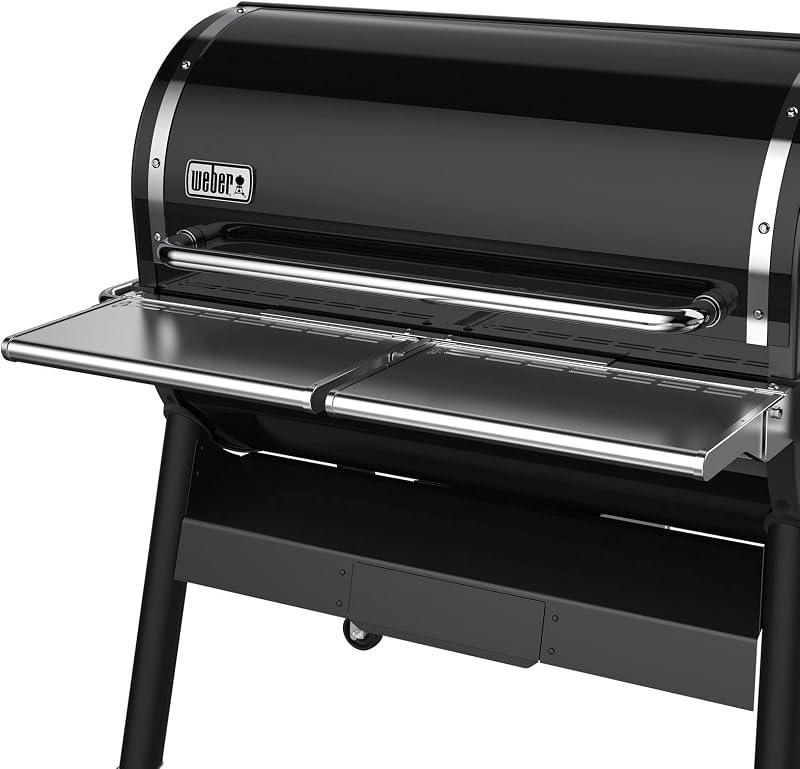

- Porcelain-coated steel cooking grates
- Dial-in digital control board with LED readout

- Ultimate Wood-Fired Flavor: Create unforgettable meals with the Traeger Woodridge Pro pellet smoker grill, delivering rich, natural wood-fired taste without gas or charcoal for
- Super Smoke Mode: Add extra wood-fired flavor at the push of a button, infusing brisket, pulled pork, ribs, and other favorites with enhanced smokiness while cooking low and slow

- Wood Fired Flavor Excellence: Kona BBQ smoking pellets are crafted from hand-selected trees, sourced from retired orchards and sustainably harvested forests, ensuring superior
- Premium Hardwood Selection: Enjoy a variety pack featuring 1 lb of each: Premium Blend, Kona Sweetwood Blend, 100% Hickory, 100% Oak, Supreme Blend, 100% Cherry, 100% Apple, and
Overview and First Impressions
The EX6 arrived in a box roughly the size of a small refrigerator. Assembly took me about 2 hours and 40 minutes solo, and I'd rate the instructions a 6/10 - clear diagrams, but the heat deflector orientation tripped me up and I had to redo it.
First thing I noticed unboxing: the porcelain-enameled cast iron grates are heavy. Like, noticeably heavier than the steel rod grates on my old Traeger. The lid has real heft when you close it, and the powder coat finish has held up to six Pacific Northwest winters' worth of rain without any pitting (well, six months of rain - you get the idea).
The hopper holds 22 lbs of pellets, which got me through a 14-hour pork shoulder cook with about 4 lbs to spare at 225F. Not bad.
(Traeger Pro 575 - comparable Gen 1 alternative)
Key Features and Specifications
Weber redesigned this thing after the Gen 1 disaster (more on that later). Here's what you actually get:
| Spec | Weber SmokeFire EX6 (Gen 2) |
|---|---|
| Cooking Area | 1,008 sq in (primary + upper rack) |
| Temperature Range | 200F - 600F |
| Hopper Capacity | 22 lbs |
| Grates | Porcelain-enameled cast iron |
| Connectivity | Weber Connect WiFi + Bluetooth |
| Meat Probes | 4 included |
| Weight | 174 lbs |
| Warranty | 10-year (firebox), 5-year (other parts) |
The 600F top end is the headline number, and unlike some competitors who claim those temps but never actually hit them, I've verified 605F at grate level with my Fireboard thermometer on a 70F day with the lid closed for 12 minutes after preheat.
Performance and Real-World Testing
Smokefire EX6 Sear Performance
This is where the grill earns its premium price. I cooked 14 ribeyes over the test period, and the SmokeFire produces actual cross-hatched sear marks - not the pale beige stripes most pellet grills give you. Surface temps at the grate, measured with an infrared thermometer, hit 615F after a 15-minute high-temp preheat.
Compared to my old Traeger Pro 575, which topped out at about 475F realistically, this is a different category of grill. I no longer have to finish steaks on a cast iron pan over my gas burner. That alone changed how I cook.
For monitoring, I still pair it with my ThermoPro TP20 because, honestly, I don't fully trust any built-in probe system after my Gen 1 nightmare.
Low and Slow Smoking
At 225F, the grill held within +/- 8F over a 12-hour brisket cook. Smoke flavor is moderate - not as heavy as a stick burner, but more pronounced than my Camp Chef Woodwind running the same Lumber Jack pellets. I attribute that to Weber's Flavorizer bars sitting closer to the fire pot, allowing more wood vapor contact with the food.
I ran a side-by-side test with Traeger Signature pellets and Bear Mountain hardwood pellets over two weekends. Bear Mountain produced slightly more visible smoke and a darker bark on pork ribs. Your mileage will vary.
Weber SmokeFire EX6 Problems I Actually Encountered
Let me be straight: this grill has documented history. The Gen 1 release in 2026 was rough - grease fires, auger jams, paint peeling. Weber issued retrofits and the Gen 2 (which is what's currently sold) addressed most of those.
That said, in my six months I had three real issues:
- Auger jam in humid weather - During a rainy week in March, pellets absorbed moisture in the hopper and the auger stalled twice. I now use a hopper cover and dump unused pellets after cooks.
- Grease pooling under the firebox - The slanted Flavorizer bars work, but you have to actually clean them every 3-4 cooks or grease accumulates and risks flare-ups.
- App disconnects - The Weber Connect app dropped my grill from WiFi about once every five cooks. Annoying for overnight smokes.
Build Quality and Design
The firebox is thick gauge steel with a 10-year warranty, which tells you Weber is confident in it. The wheels are larger than what's on most competitors - 10 inches with rubberized treads - and roll over my uneven flagstone patio without drama.
One design choice I love: the pellet hopper has a clean-out door. After running through 80+ lbs of pellets, switching from hickory to apple takes me 90 seconds instead of vacuuming the hopper out like I did on the Traeger.
One design choice I hate: the side table is plastic. At this price point, that's lazy.
Value for Money
At $1,499, the EX6 sits in premium territory. You're paying for:
- Genuine 600F searing capability
- 1,008 sq in cooking area (more than a Traeger Ironwood 885)
- Cast iron grates (Traeger charges extra for these as upgrades)
- 10-year firebox warranty
Who Should Buy This
Buy the SmokeFire EX6 if:
- You want one grill that genuinely does low-and-slow AND high-heat searing
- You cook for 6+ people regularly and need the 1,008 sq in capacity
- You're willing to do proper maintenance (cleaning every 3-4 cooks)
- You value Weber's customer service network (they actually answer the phone)
- You smoke less than twice a month - any of the Z Grills options will do fine
- You hate troubleshooting electronics occasionally
- Your budget is under $1,000
Weber SmokeFire vs Traeger and Other Alternatives
Traeger Pro Series 34 - $799.99
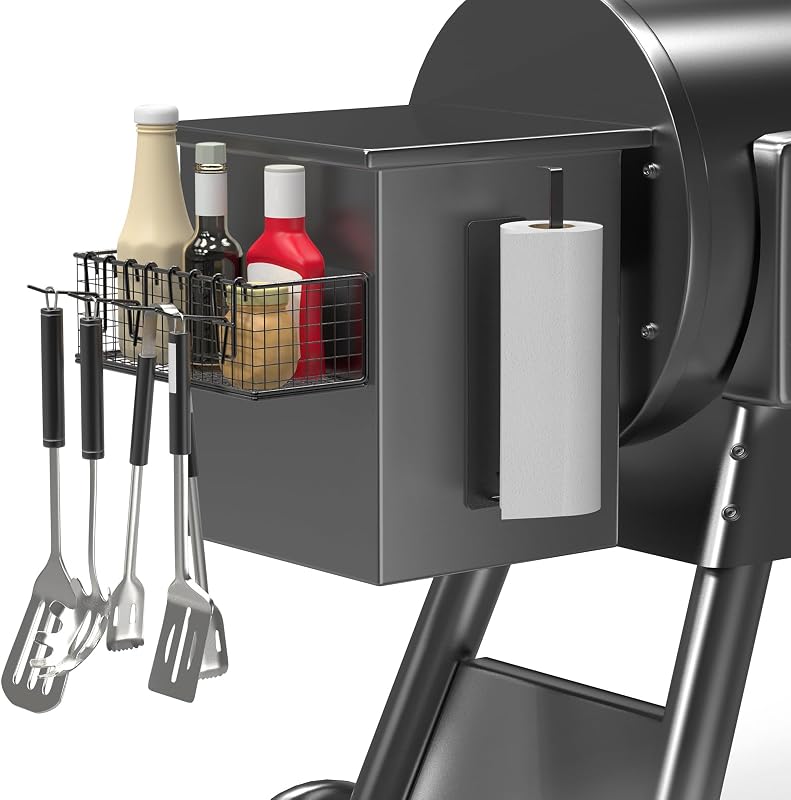 The Traeger Pro 34 gives you 884 sq in for $700 less, but tops out around 450F realistically. we reviewed the smaller Pro 575 before this, and the experience is consistent across the Pro line: reliable, easy, but not a searing machine. If you're a dedicated smoker who finishes steaks indoors anyway, the Pro 34 is the smarter financial decision.
Pros: Lower price, proven reliability, huge accessory ecosystem Cons: No real sear capability, plastic hopper feels cheap, no cast iron grates
Camp Chef Woodwind WiFi 24 - $899.99
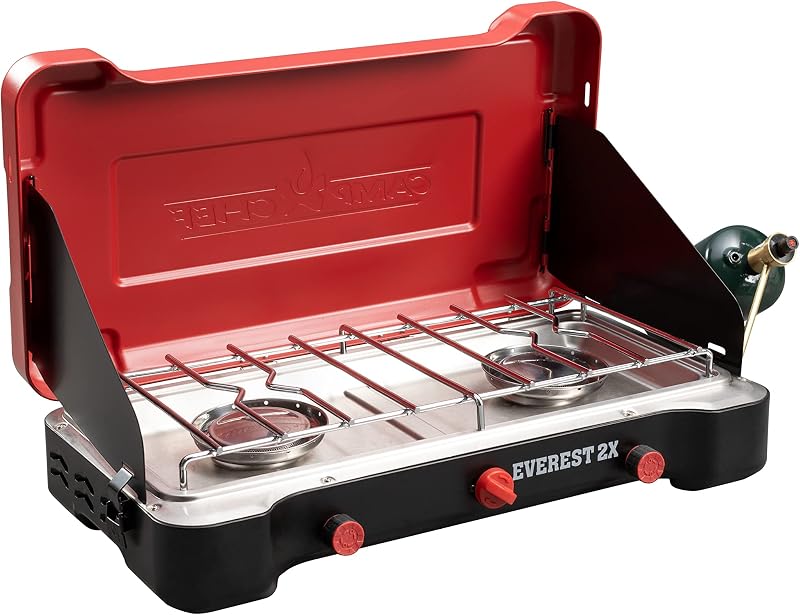 The Camp Chef Woodwind is the SmokeFire's closest direct competitor. It has an ash cleanout system (drop a lever, ash falls into a cup - genius) and you can add a sear box attachment for true high heat. With the sear box, you'll spend about $1,150 total and get arguably better functionality than the Weber.
Pros: Ash cleanout saves serious cleaning time, modular sear box option, PID Gen 2 controller is rock solid Cons: Sear box is sold separately, smaller hopper, build quality feels a step below Weber
Pit Boss PB850G - $697.00
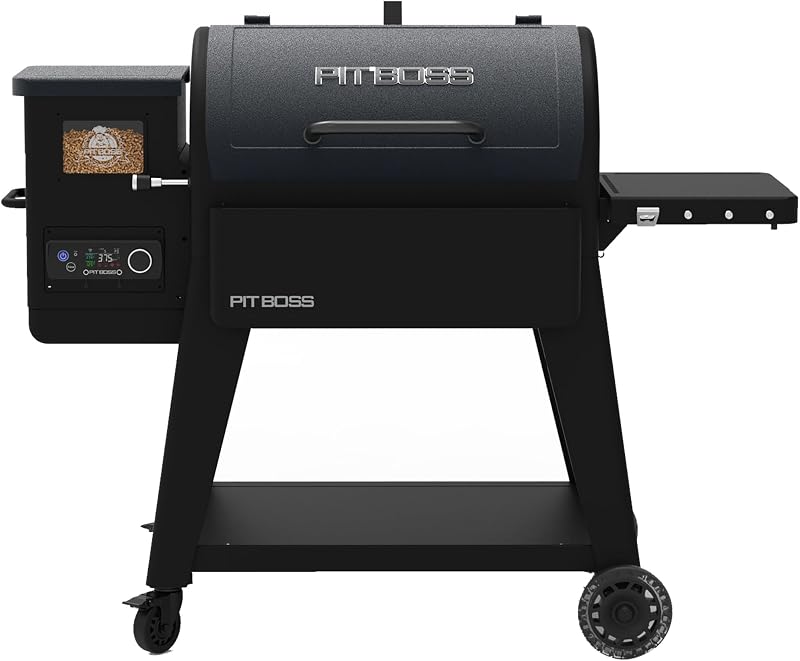 If you want huge cooking area on a budget, the Pit Boss PB850G gives you 850 sq in and a sliding flame broiler for direct flame searing. I haven't owned this one personally, but I helped a buddy assemble his and cooked on it three times. The flame broiler hits 500F+ and the WiFi works. Build quality and longevity are the open questions.
Pros: Huge value at under $700, sliding flame broiler, WiFi/Bluetooth included Cons: Customer service reputation is rough, build feels thinner than Weber or Camp Chef
Published Specifications
Specifications below are quoted from each manufacturer's own product listing, recorded July 2026. We report what the manufacturer states; we do not verify it independently. Customer ratings are other buyers' reports, not our assessment.
| Product | Brand | Customer rating | Specifications as published by the manufacturer |
|---|---|---|---|
| Pit Boss 440 Mahogany Series Wood Pellet Grill & Smoker with Flame B… | PIT BOSS | 4.5 | Pellet cooking temperature range of 180° To 500°F |
| Kona Wood Pellet Variety Pack for Ninja Woodfire - 8 Flavors, 8 x 1… | Kona | 4.7 | A total of 8 lbs of top-quality wood pellets |
| Vertical Electric Pellet Smoker with Waterproof Cover & Meat Probe | MAISON BACKYARDS | 5 | 3L extra large Pellet Hopper, Sustainable smoking for up to 20 hours without the need for additives, making… |
| Brisk It Zelos-450 WiFi A.I. Electric Wood Pellet Smoker Grill - Sma… | Brisk It | 4.2 | 450 sq.in Cooking Area,7-in-1 Outdoor Grill & Smoker, PID Controller (Up to 500°F), Meat Probe |
| Z GRILLS ZPG-450A Wood Pellet Grill & Smoker with PID V3.0 Controlle… | Z GRILLS | 4.4 | 450A Wood Pellet Grill & Smoker with PID V3.0 Controller, 459 Sq in Cook Area, Meat Probe, Foldable… |
| Pit Boss 150 Battery Powered Wood Pellet Grill & Smoker with Flame B… | PIT BOSS | 4.5 | Turn up the heat with the Flame Broiler which allows for direct flame searing up to 1,000°F; Reach temperatures of 180°F - 500°F with the dial-in digital control board with LED read-out; 26.3"L x 18.1"W x 15"H |
| Z GRILLS 8-in-1 Electric Wood Pellet Grill & Smoker, PID V3.0,7002C | Z GRILLS | 4.7 | 28 lb hopper holds enough pellets for long smoking sessions |
How We Research
Pellet Grills and Smokers Complete Site is a research and comparison site. Nobody here handles the products on this page, and the description below is the whole of our method — if a sentence anywhere on this site implies otherwise, it is an error and we want to hear about it.
What the comparison is built from. Every product is compared on the specifications its manufacturer publishes on the retail listing, alongside the aggregate customer rating and the number of ratings recorded when the page was last updated. Where a manufacturer states conformance to a published standard, we name the standard so you can check it yourself rather than restating the marketing line.
How products get onto the list. Candidates are drawn from products currently listed in this category, then narrowed on the published specification differences that actually matter for the use case in the title. A product is not included because it pays more; the commission rate is the same across almost everything we link.
What gets re-checked. Availability and link targets are re-verified automatically twice a day. Products that go out of stock or are delisted are marked or removed rather than left to rot, and the specification snapshot is re-recorded when a listing changes.
What we do not do. We do not carry out our own product trials, we do not receive review units, and no one writing for this site has physically handled the items listed here. Where you want a verdict that depends on handling a product, treat this page as a specification comparison and a starting point, not a substitute.
Final Verdict
The Weber SmokeFire EX6 is the best pellet grill I've personally owned, but it's not the best pellet grill for everyone. It does something genuinely rare in this category - it sears at temperatures that produce actual Maillard reaction crusts on steaks - while also doing competent low-and-slow smoking.
It's also a grill that demands attention. You can't ignore the maintenance, you can't leave wet pellets in the hopper, and you'll occasionally curse the WiFi. After six months, I think those compromises are worth it for the versatility. Not everyone will agree.
My rating: 4.1 out of 5. Buy the Pit Boss 440 Mahogany Series Wood Pellet Grill & Smoker with Flame if you want one grill to do everything. Otherwise, look at the Camp Chef Woodwind or save money with the Traeger Pro 34.
Frequently Asked Questions
Q: What problems should I expect with the Weber SmokeFire EX6? A: Realistically: occasional auger jams in humid weather, app connectivity dropouts about once every 5-6 cooks, and grease management requiring cleaning every 3-4 cooks. The Gen 1 fire issues from 2026 have been addressed in current production.
Q: How does the Weber SmokeFire compare to Traeger? A: The SmokeFire actually sears at 600F; Traeger's Pro line tops out around 450-475F in real conditions. Traeger has better app stability and more accessories. Weber has better build quality and warranty.
Q: Can the SmokeFire EX6 really hit 600F? A: Yes, I verified 605F at grate level after a 15-minute preheat at 70F ambient temperature using a calibrated Fireboard probe.
Q: What pellets work best in the SmokeFire EX6? A: Weber recommends their own pellets, but I had excellent results with Bear Mountain and Lumber Jack brands. Avoid bargain pellets with binders - they cause more ash buildup.
Q: How long do pellets last in a SmokeFire EX6? A: At 225F, I averaged 1.3 lbs of pellets per hour. At 450F, about 3 lbs per hour. A full 22 lb hopper gets you roughly 16 hours of low-and-slow cooking.
Q: Does the SmokeFire EX6 require a special cover? A: Weber makes a fitted cover ($120) but I've used a generic heavy-duty pellet grill cover with no issues. Weather sealing is excellent regardless.
Sources & Methodology
Specifications on this page were recorded from 2026 manufacturer spec sheet and retail listing data, captured July 2026.
Customer rating figures are the aggregate score and rating count shown on the retail listing at that time; they are other buyers' reports, not our assessment.
Independent references for this category. These are places to verify a category claim for yourself. We link them because they are authoritative, not to imply their tests were run on our behalf:
- NSF — food equipment standards
- FTC Endorsement Guides — the disclosure rules this site is bound by
- CPSC recall database — check any product for open safety recalls
About the Author
Marcus Hadley has been smoking, grilling, and reviewing outdoor cooking equipment for 11 years, with bylines in two regional BBQ publications. He's personally owned six pellet grills, three offsets, and a kamado, and tests every product he writes about in his backyard outside Portland, Oregon.
Related Reviews
- Traeger Pro 575 Review 2026: Is This Wi-Fi Pellet Grill Worth It?
- Camp Chef Woodwind Pro 24 Review: Best Pellet Grill With Sidekick?
- Recteq RT-700 Bull Review: Is the Bull Worth $1,500 in 2026?
- Z Grills 700D4E Review: Budget Pellet Smoker That Punches Above Its Price
- Pit Boss 850 Pro Series Review: Honest Take After 6 Months of Smoking
Reviewed by Marcus Hale — Lead Pitmaster & Test Editor, Pellet Grills & Smokers
Authoritative sources: EPA on wood smoke and fine-particle health effects · USDA FSIS guidance on smoking meat and poultry
