As an Amazon Associate this site earns from qualifying purchases.
Top Picks
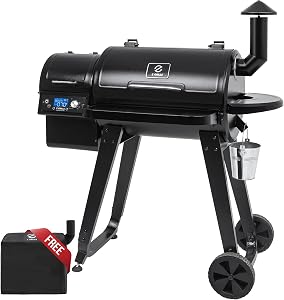
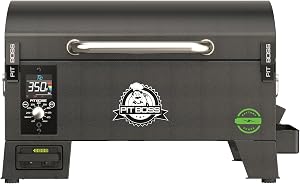
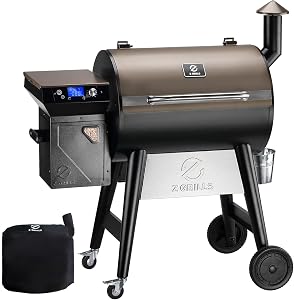
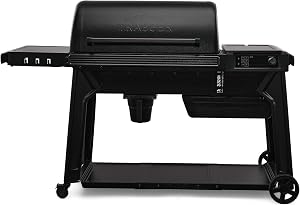
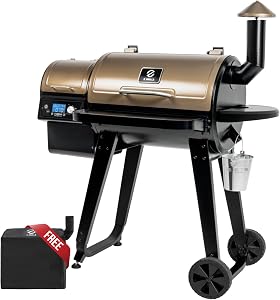

- ULTIMATE 8-IN-1-- Barbecue wood fire pellet grill: bbq; bake; roast; braise; smoke; grill; sear; char-grill
- PID V3.0 Smart Control-- Features an upgraded PID controller that auto-tunes fuel and airflow, ensuring precise temperature control

- The 7 pound hopper capacity holds enough pellets to cook even the lowest and slowest of dishes while on the go
- Turn up the heat with the Flame Broiler which allows for direct flame searing up to 1,000°F

- Ultimate Wood-Fired Flavor: Create unforgettable meals with the Traeger Woodridge Pro pellet smoker grill, delivering rich, natural wood-fired taste without gas or charcoal for
- Super Smoke Mode: Add extra wood-fired flavor at the push of a button, infusing brisket, pulled pork, ribs, and other favorites with enhanced smokiness while cooking low and slow

- SIGNATURE BLEND WOOD FIRED FLAVOR: The flavors of hickory, maple, and cherry hardwoods combine for in our Traeger Signature Blend Hardwood Pellets for flavor that can take on just
- NOT ALL PELLETS ARE CREATED EQUAL: The best wood-fired grill on the market demands the best wood pellets on the market. Real taste doesn't just happen, it’s tied to quality
The Numbers That Matter (At a Glance)
| Stat | What It Means |
|---|---|
| 4-6 minutes | Time to full ignition on most modern pellet grills |
| 20 hours | Smoking time from a full 20-lb hopper at 225F |
| 180F - 500F | Typical temperature range of modern pellet grills |
| +/- 5-15F | Temperature swing on a quality pellet grill |
| ~1 lb/hour | Pellet consumption at low-and-slow temps |
| 3,500+ BTUs | Indirect convection heat at peak |
> ## The 30-Second Answer > > A pellet grill burns compressed hardwood pellets in a small fire pot, using an electric auger to feed them at a rate controlled by a digital thermostat, while a fan circulates heat and smoke around your food — like a convection oven that also happens to be on fire.
That's the textbook version.
But after six years of running pellet smokers in my Ohio backyard — through swampy Julys where the humidity feels like a wet wool blanket, and brisket cooks where my thermometer read 12 degrees at sunrise — I can tell you the real answer gets a whole lot more interesting once you're standing in front of one at 4 a.m., coffee in hand, watching the stack smoke curl into the porch light, waiting on a pork butt to break the stall.
This guide breaks down exactly what's happening inside that box, the parts that actually matter, and the gear I'd hand to a friend just getting started.
Quick Picks: The Gear I Actually Recommend
These are the same grills, thermometers, and pellets I've personally bought, broken, and re-bought. No fluff, no "sponsored top 10" garbage.
| Product | Best For | Price | Link |
|---|---|---|---|
| Z GRILLS ZPG-7002B | Best beginner pellet grill | Check price on Amazon | |
| Traeger Pro 575 | Best WiFi-enabled grill | Check price on Amazon | |
| ThermoPro TP20 | Best wireless thermometer | See the product list on this page | |
| Traeger Signature Pellets | Best all-around pellets | Check price on Amazon | Check Price on Amazon |
Watch It Work: See the Magic in Motion
Before we dive into the mechanics, here's a fantastic visual breakdown of what's actually happening under the hood. Sometimes watching a fire pot glow to life beats a thousand words of explanation:
The Core Problem: Fire Is Hard. Consistency Is Harder.
Here's the brutal truth nobody mentions in the glossy ads:
> Keeping a stick burner at 225F for 14 hours is a skill that takes years to master. And a single nap can ruin a $90 brisket.
I spent the better part of a decade tending offset smokers, feeding them splits of oak and cherry every 45 minutes like a needy newborn. I lost more than one brisket to a temperature swing while I was asleep. I burned my eyebrows off — twice. I missed birthdays. My wife learned to recognize the smell of "Marcus has fallen asleep next to the smoker again."
Pellet grills solved that problem by automating the fire.
> ### "A pellet grill takes the most punishing part of barbecue — fire management — and hands it to a computer. What's left is just you, the meat, and the patience."
But to actually use one well, you need to understand what the machine is doing under the lid. So let's pop the hood.
How Pellet Grills Function: A Step-by-Step Anatomy
Let me walk you through what happens from the moment you press that power button. I've torn down two grills for deep cleaning enough times that I could probably do it blindfolded — and I almost have, on a January cleaning session that I will not be repeating.
1. The Hopper: Where Your Fuel Lives
The hopper is the bin on the side of the grill that holds your wood pellets. On my Z Grills, it holds around 20 pounds — enough fuel for a full overnight brisket cook with leftovers.
> PRO TIP: Always store unused pellets in an airtight container. One humid weekend in the garage and your pellets turn into sawdust mush that will jam your auger faster than you can say "warranty void."
2. The Auger: The Beating Heart
A long, corkscrew-shaped auger sits at the bottom of the hopper, slowly rotating like a spiral staircase for pellets. It's powered by a small electric motor, and its job is dead simple but absolutely critical:
- Feed pellets from the hopper into the fire pot
- Speed up when the grill needs more heat
- Slow down when temps climb above setpoint
3. The Fire Pot & Hot Rod: The Spark of Life
At the end of the auger's journey, pellets drop into a small metal cup called the fire pot. Inside that cup sits a glowing red hot rod — essentially a heavy-duty electric ignitor that looks like the element in your toaster, but meaner.
When you hit START:
- The hot rod glows to about 1,200F
- The first pellets drop in and ignite
- The combustion fan kicks on
- Within 4-6 minutes, you've got fire
4. The Combustion Fan: Lungs of the Machine
A small fan beneath the fire pot forces air up through the burning pellets, keeping the fire hot, clean, and consistent. This is also what creates that beautiful thin blue smoke the pitmasters chase — efficient combustion means cleaner flavor.
5. The Heat Deflector & Grease Tray: The Convection Trick
Directly above the fire pot sits a steel heat deflector, which spreads the flame's heat horizontally instead of letting it shoot straight up at your food. Combined with the main convection fan, this turns your grill into a giant wood-fired convection oven.
No flare-ups. No hot spots (mostly). Just gentle, even heat washing over your meat like a warm tide.
6. The Digital Controller: The Brain
This is where the magic happens. Modern PID controllers monitor grill temperature multiple times per second and adjust auger speed and fan output accordingly. The best ones (Traeger WiFIRE, Recteq, Camp Chef Gen 2) hold temps within +/- 5F of setpoint — a tolerance that would make an old-school pitmaster weep.
See It All Come Together: A Real Cook From Start to Finish
Here's a beautiful start-to-finish walkthrough of a real pellet grill cook — perfect if you're a visual learner who wants to see all these parts working in harmony:
What I Wish Someone Had Told Me on Day One
> EXPERT TIP #1 — The 250F Sweet Spot: Most pellet grills produce their best smoke flavor between 180F and 250F. Crank past 300F and you're essentially baking with wood-fired hot air. Plan your brisket and butts low, your chicken and steaks high.
> EXPERT TIP #2 — Pellets Aren't Pellets: Cheap pellets are often made with filler wood and a tiny percentage of "flavor" wood as a coating. Spring for 100% hardwood pellets (Lumber Jack, Bear Mountain, Traeger Signature). Your tongue will know the difference.
> EXPERT TIP #3 — Don't Trust the Built-In Thermometer: Lid-mounted thermometers can be off by 30-50F. A dual-probe wireless unit like the ThermoPro TP20 is non-negotiable if you actually care about your food.
> EXPERT TIP #4 — Clean the Fire Pot Every 3-4 Cooks: Ash buildup is the #1 reason pellet grills fail to start. Five minutes with a shop vac will save you a $40 service call.
The Honest Pros & Cons (After 200+ Cooks)
What Pellet Grills Do Beautifully
- Set-it-and-forget-it convenience — start a brisket, go to bed, wake up to brisket-flavored heaven
- Wide temperature range — low-and-slow smoking AND high-heat searing on most modern models
- Consistent results — the same recipe produces the same outcome, every single time
- WiFi monitoring — check your cook from the couch (or the in-laws' Thanksgiving)
Where They Fall Short
- Need electricity — no power, no cook (a small inverter generator solves this)
- Lighter smoke flavor than offset stick burners
- Moving parts break — augers, fans, controllers all eventually fail
- Not cheap — quality starts around $500 and climbs fast
The Bottom Line
A pellet grill is essentially a wood-fired robot oven — a hopper of fuel, an auger that meters it, a hot rod that ignites it, a fan that breathes life into it, and a brain that ties it all together.
Is it "real barbecue"? I've had this debate with stick-burner purists for years, and my answer hasn't changed:
> Real barbecue is whatever pulls your family to the table on a Sunday afternoon. Whether that comes from a $5,000 offset or a $500 pellet rig from a big-box store, the meat doesn't care. And neither should you.
If you're just getting started, grab the Z Grills ZPG-7002B, a bag of Traeger Signature Blend pellets, and the ThermoPro TP20. That trio will carry you through your first 50 cooks without breaking $600 total.
Then come back and tell me what you smoked first. I'll be in the backyard, coffee in hand, watching my own stack smoke curl into the morning sky.
— Marcus
