Quick answer: The honest truth is that no wood-burning pellet grill is fully safe to operate inside a sealed garage. The best pellet grill for smoking jerky in garage with poor ventilation is one compact enough to roll just outside the open garage door — the Pit Boss PB150PPG tabletop wins on footprint, while the Traeger Pro 22 wins on capacity. If you genuinely cannot vent the space, skip pellet combustion entirely and use the electric SmokinTex 1500-C, which produces a tiny fraction of the carbon monoxide that a pellet auger fire generates. Below we rank each option for low-clearance, low-airflow garage setups in 2026.
Why "pellet grill in a poorly ventilated garage" is a safety question first
Pellet grills burn compressed hardwood. Combustion produces carbon monoxide (CO), fine particulate (PM2.5), and creosote — all of which accumulate in still air. A typical attached garage trades roughly 0.1–0.3 air changes per hour with the house, which is essentially nothing compared to the 8–15 ACH a kitchen range hood pulls. That is why every pellet grill manufacturer, including Traeger and Pit Boss, explicitly prohibits indoor and garage use in their 2026 owner's manuals.
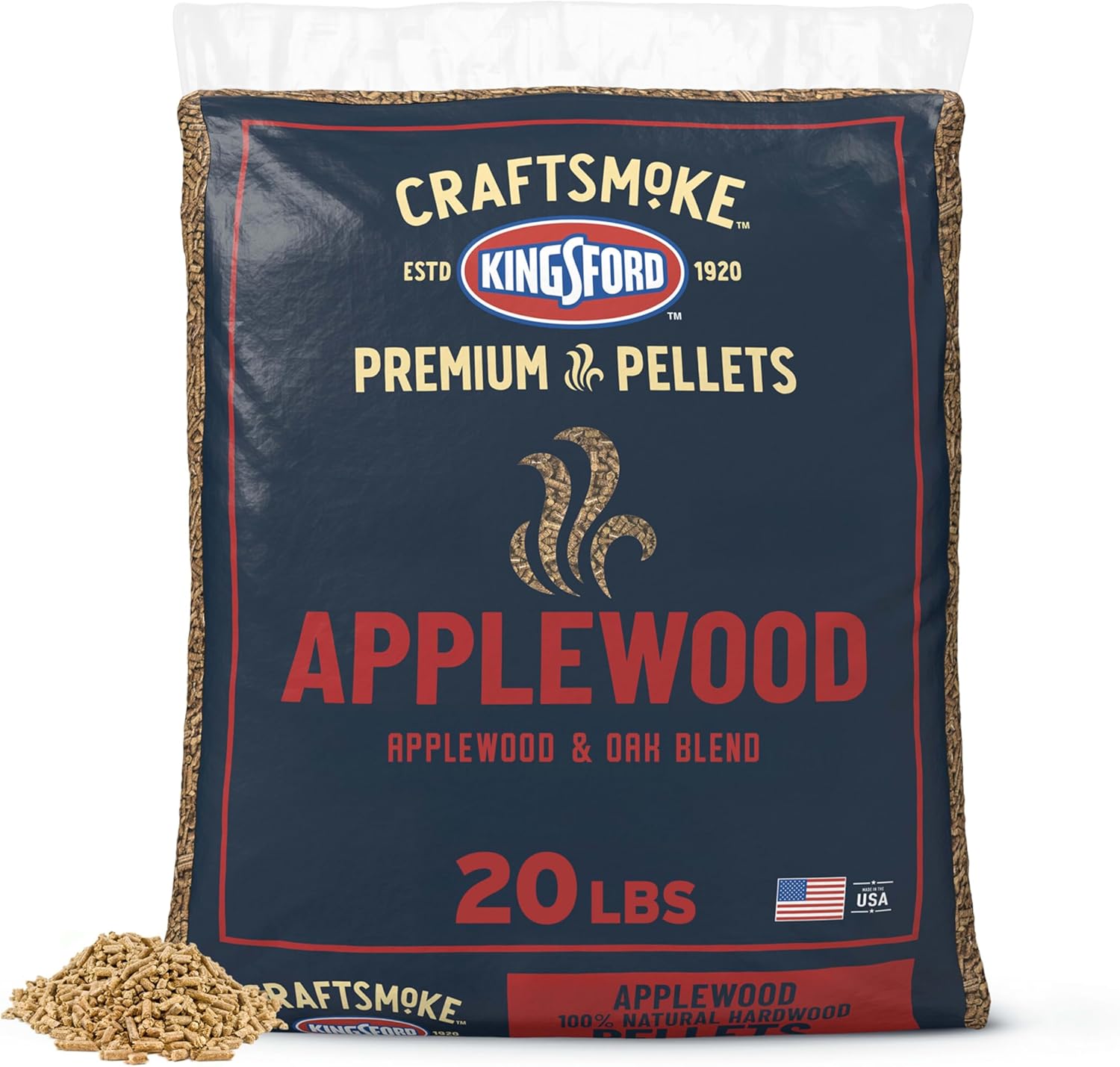
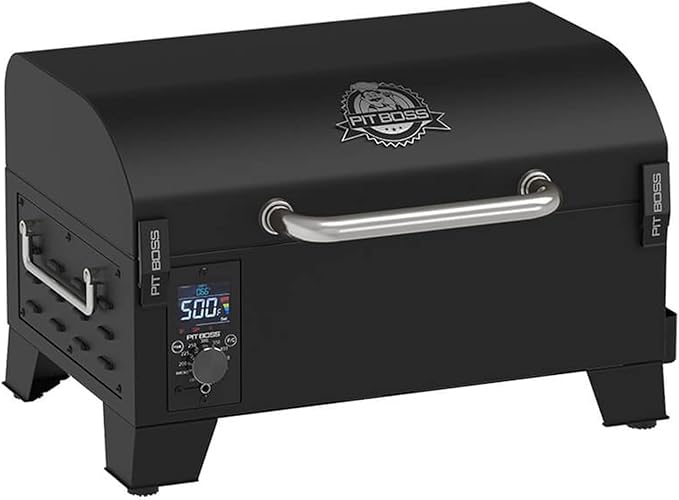
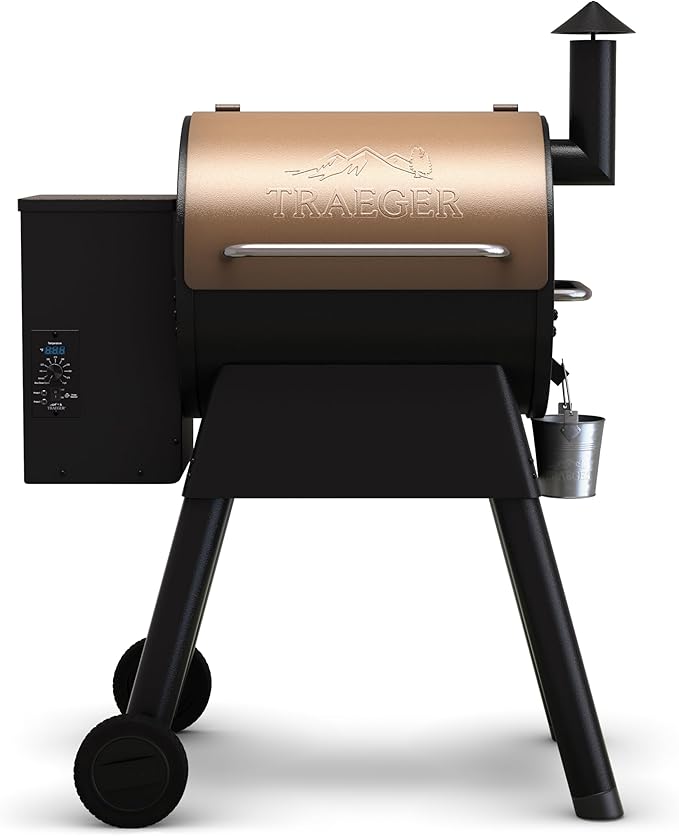
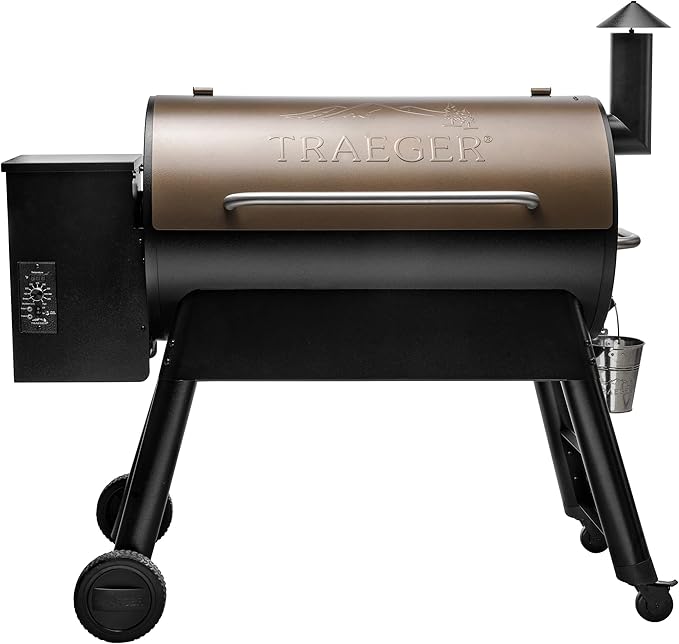
The good news for jerky makers: jerky is the easiest smoke to relocate. You're cooking at 160–180°F for 4–6 hours with the lid closed almost the entire time. That means a small grill on a rolling cart can live two feet outside the garage door, run an extension to an indoor outlet, and you can still monitor it from a folding chair inside. So our recommendations below optimize for two scenarios: (1) compact pellet rigs you can position at the garage threshold, and (2) electric smokers that are genuinely safer if the grill cannot leave the bay.
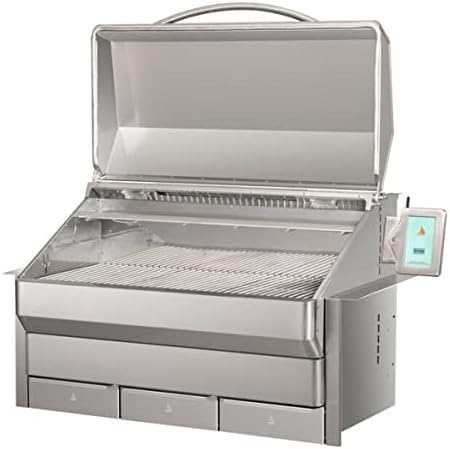
How we picked for low-ventilation jerky setups
- Footprint & portability — tabletop or 22"-class units that roll through a standard 7-foot garage door.
- Low-temp stability — jerky needs a rock-steady 165–180°F; cheap PID controllers swing 40°F.
- Smoke output per pound of meat — less is better when residual smoke will drift back into the bay.
- Power draw — must run on a standard 120V/15A garage circuit without tripping a shared breaker.
Comparison: best smokers for jerky in a tight garage (2026)
| Model | Type | Cook Area | Low-Smoke Mode | Footprint | Best For |
|---|---|---|---|---|---|
| Pit Boss PB150PPG | Pellet (tabletop) | 256 sq in | Yes (180°F) | 21" x 18" | Threshold of garage door |
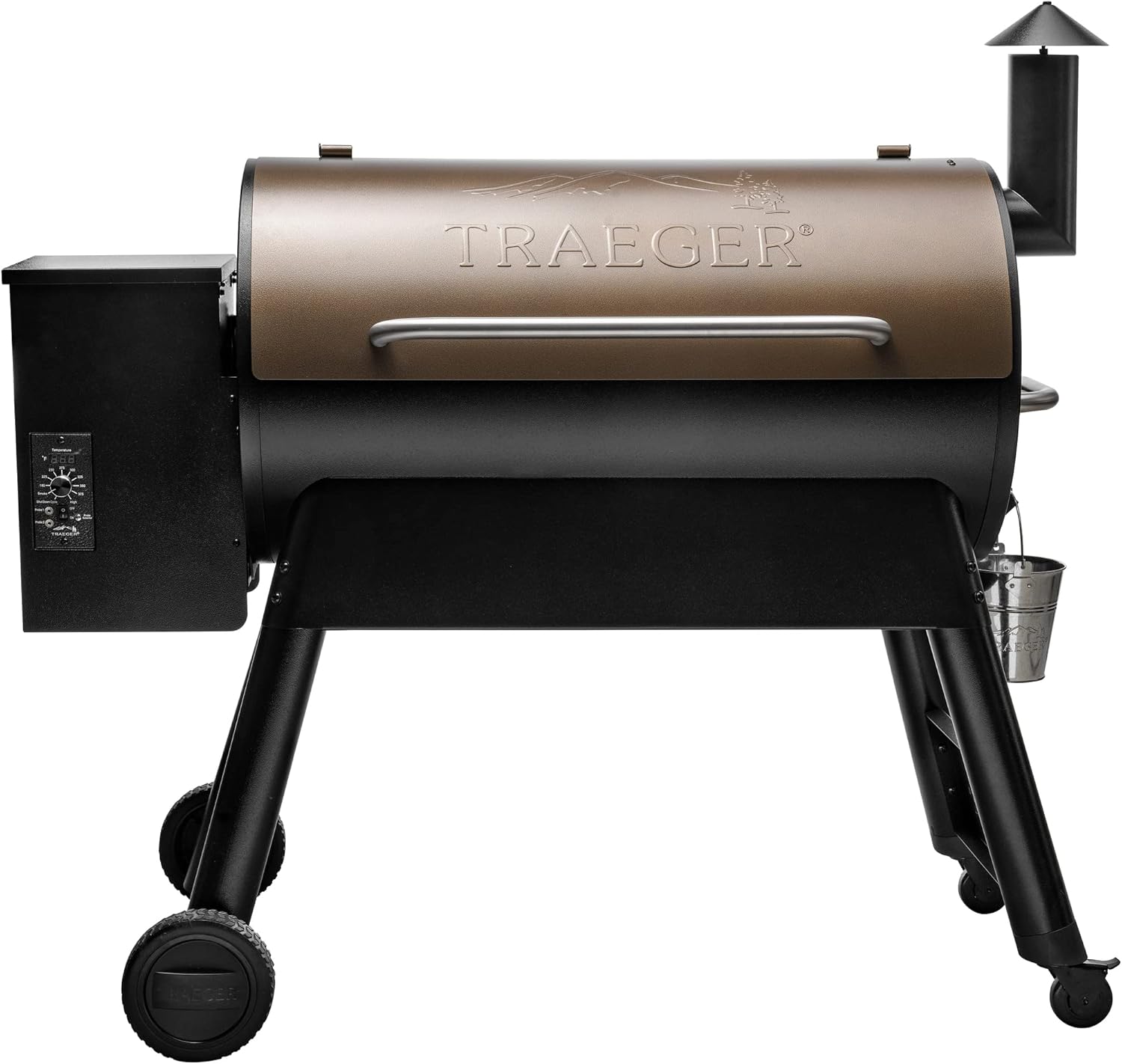
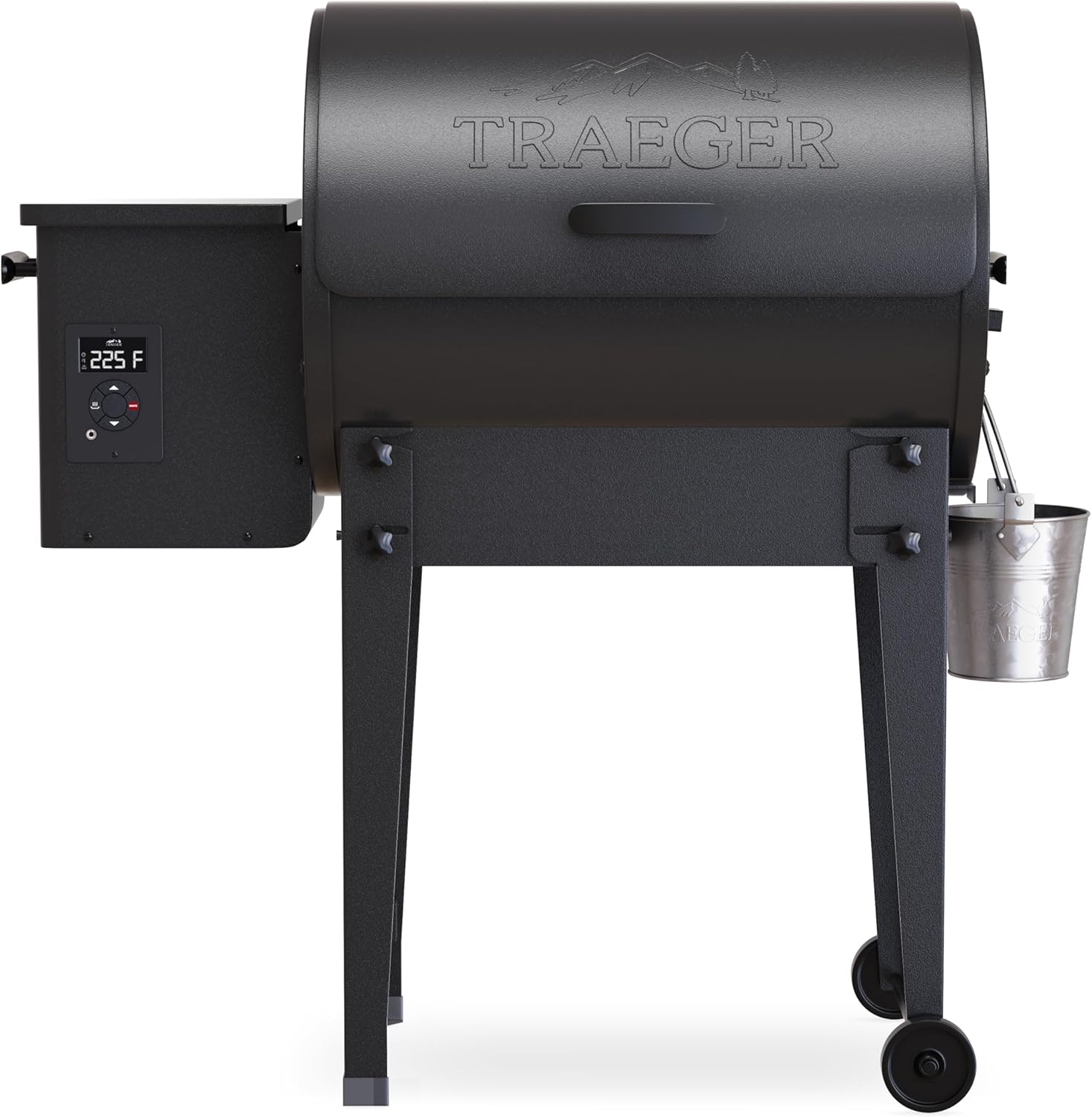
| Traeger Pro 22 | Pellet (cart) | 572 sq in | Yes (Super Smoke 165°F) | 41" x 27" | Family batches, roll-out cook |
| Traeger Pro 34 | Pellet (cart) | 884 sq in | Yes | 53" x 27" | Bulk jerky for hunters |
| SmokinTex 1500-C | Electric | 1,200 cu in | Inherently low | 20" x 22" | Garages that cannot vent at all |
| Amazon Basics 16" Vertical | Charcoal | Two racks | No | 16" x 16" | Budget outdoor backup only |
Top picks reviewed
1. Pit Boss PB150PPG Tabletop — best pellet grill for smoking jerky in garage with poor ventilation
This is the unit we recommend most often for the exact query at the top of this article. The PB150PPG weighs roughly 47 lb, measures 21" wide, and runs on a standard 120V plug, so you can lift it onto a folding workbench, push the bench so the grill's chimney clears the garage door's drip edge, and never bring combustion into the bay. The dial-in temperature drops to 180°F — the textbook setpoint for beef jerky — and the small 5 lb hopper means you load it once and walk away for a 6-hour cook. For a single garage hobbyist making 2–3 lb of jerky per session, this is the right call.
Check the Pit Boss PB150PPG on Amazon
2. Traeger Pro 22 — best mid-size pellet smoker you can wheel to the threshold
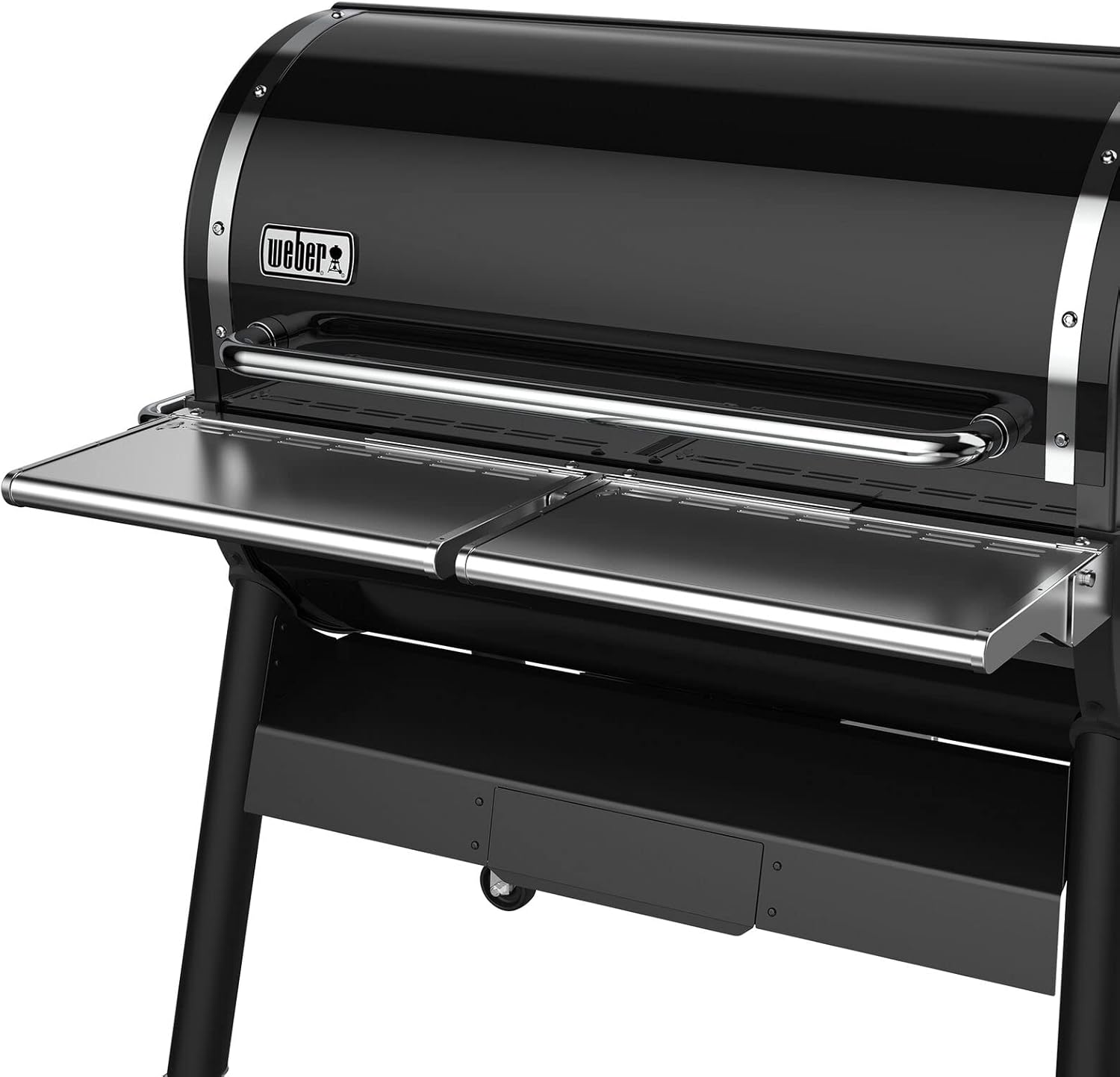
If you want more capacity but still need the grill to spend its working life parked at the open bay door, the Pro 22 is the sweet spot. Its 572 sq in surface fits roughly 8 lb of sliced flank steak across two racks (add the Traeger jerky rack accessory). The 2026 D2 controller holds 165–180°F within a few degrees and includes Super Smoke mode, which is genuinely useful for jerky because the cycle pushes smoke without raising pit temperature. The cart has 8" wheels that clear most garage thresholds. Set a CO alarm at head height inside the garage as a non-negotiable safety layer, even when the grill is technically outside.
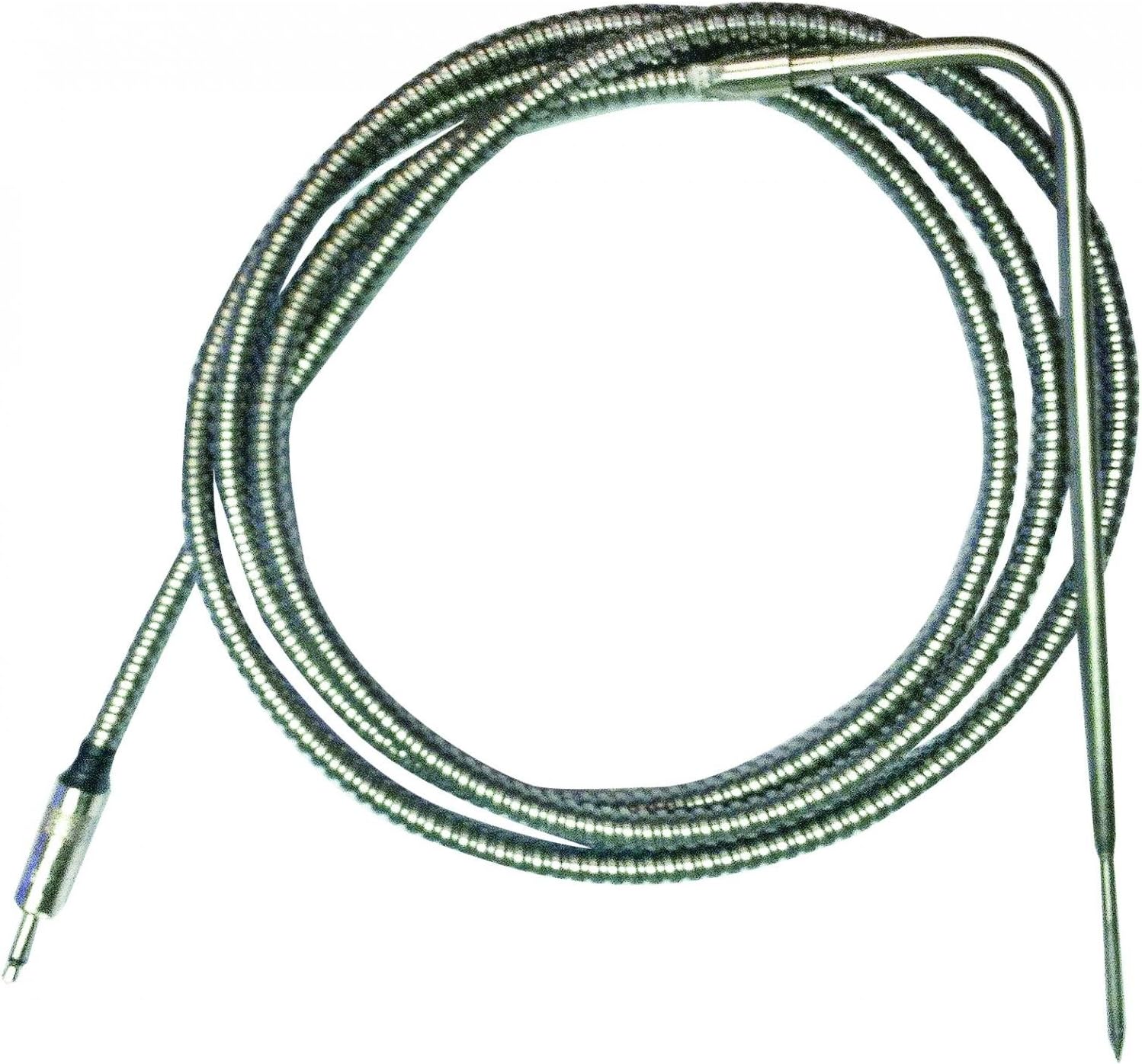
Check the Traeger Pro 22 on Amazon
3. Traeger Pro 34 — for hunters processing whole deer
The Pro 34 is the same controller and hopper as the 22 in a longer barrel: 884 sq in, enough for 14–16 lb of venison jerky in one run. It is too large to live inside any garage during operation and it is heavy to wheel daily, but if you have a concrete pad just outside the bay door and want to do one big seasonal smoke instead of three weekend cooks, the Pro 34 saves hours. Pellet consumption at 180°F is roughly 0.5 lb per hour, so a 5 lb hopper top-off covers most jerky cycles without re-opening the lid.
Check the Traeger Pro 34 on Amazon
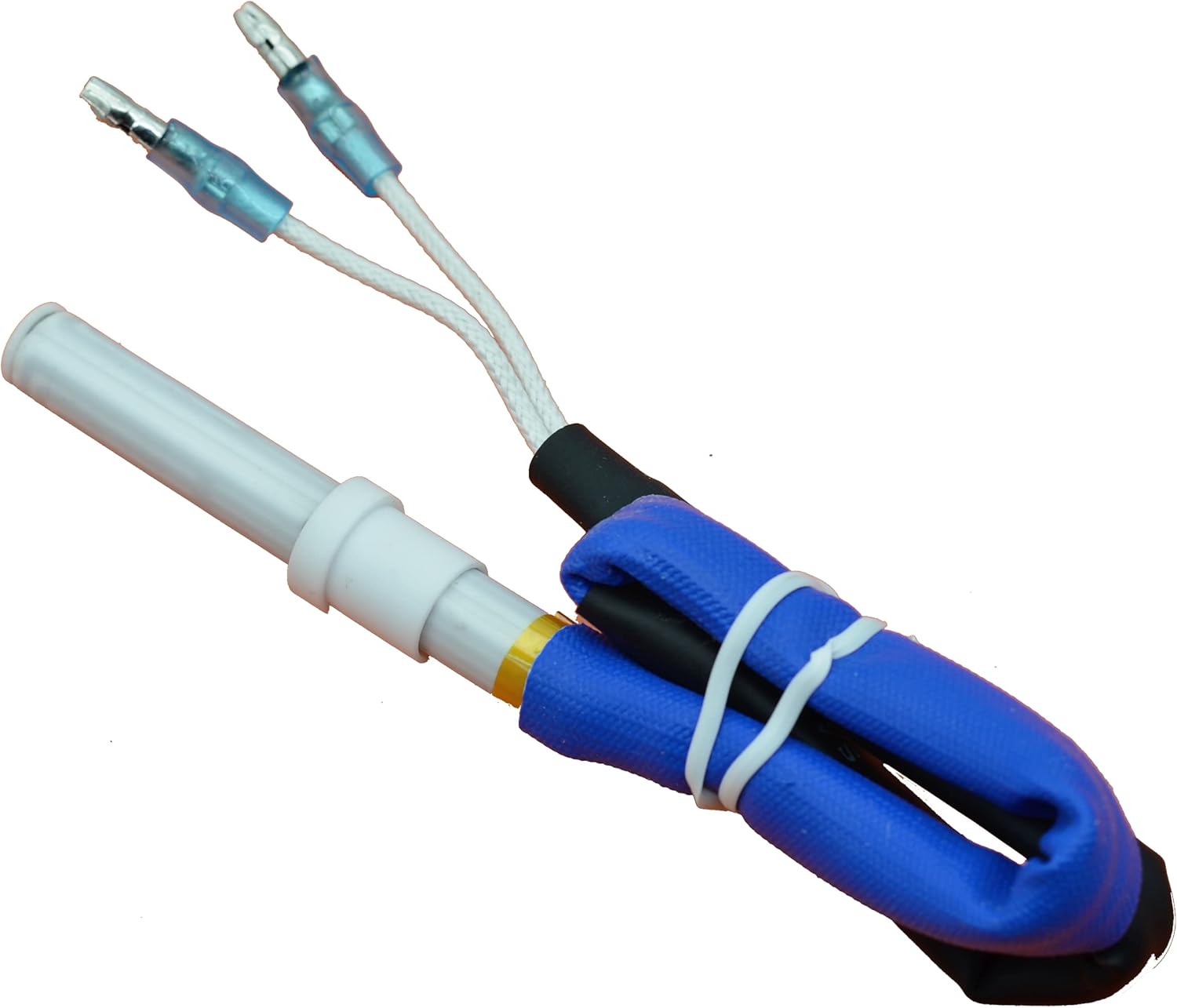
4. SmokinTex 1500-C — the only smoker we'd run inside a poorly ventilated garage
If the garage door truly cannot stay open — security, weather, HOA, apartment carport — switch from pellet combustion to a sealed electric cabinet. The SmokinTex 1500-C uses a 750W resistive element to smolder a small wood chunk in a side tray. CO output is a tiny fraction of a pellet auger fire, particulate is dramatically lower, and there is no flame at all. The insulated cabinet holds 180°F effortlessly and the 1,200 cu in interior swallows about 12 lb of meat. It is genuinely the best indoor-tolerant option in this lineup for jerky; the trade-off is that it is not a pellet grill, so you lose the convection-fan smoke ring pellet purists prefer. For jerky, that texture difference is negligible.
Check the SmokinTex 1500-C on Amazon
5. Amazon Basics 16" Vertical Charcoal Smoker — only if outdoors
Listed for completeness: this is a budget bullet smoker. It is charcoal-fired, produces heavy smoke and CO, and absolutely cannot be used in any garage, ventilated or not. If you have a backyard and want a $60 starter for jerky before committing to pellet, it works fine. Inside or near a garage opening, do not consider it.
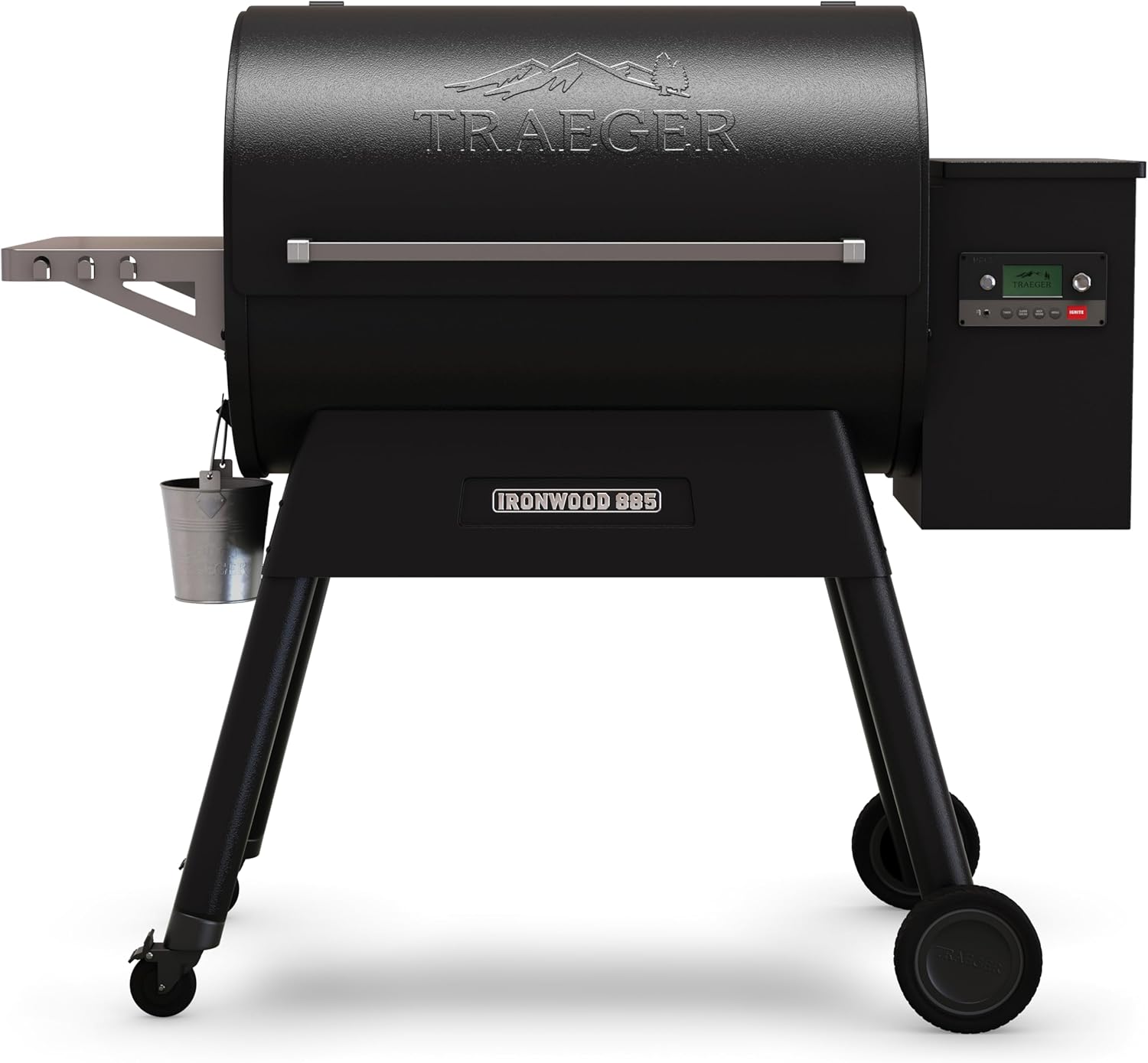
Check the Amazon Basics 16" Vertical on Amazon
Setting up a pellet grill safely at a garage threshold
Even with a tabletop unit parked at the door opening, take these steps every cook:
- Open the bay door fully — partial opens create a low-pressure pocket that pulls smoke back into the garage.
- Position the chimney past the door's outer edge by at least 12 inches. Drip-edge eddies are real.
- Run a 20" box fan at the opposite wall blowing outward to create positive cross-flow toward the door.
- Install a battery CO alarm at head height inside the garage. UL 2034-listed; replace every 7 years.
- Never leave a pellet grill running unattended in a garage, even at the threshold — auger jams and burn-pot reignites are the most common cause of garage grill fires.
For deeper background on pellet-grill combustion safety, see our guide to pellet grill carbon monoxide risks in enclosed spaces and the companion piece on best wood pellet flavors for beef jerky.
Jerky-specific tuning tips on any of these smokers
Jerky is a dehydration cook, not a barbecue cook. The goal is to drive water activity below 0.85 while imparting smoke and holding internal temperature above 160°F long enough to kill pathogens (USDA 2026 guidance: hold at 160°F for at least 10 minutes for whole-muscle beef). On a pellet grill at 180°F, that happens naturally in the first 90 minutes; the remaining 3–4 hours are pure moisture removal. Slice meat 1/4" thick across the grain, cure with 1 tsp Prague Powder #1 per 5 lb of meat, and rotate racks halfway through. If your garage-threshold cook is fighting humidity, crack a foil-wrapped brick under the lid for the last hour to let extra moisture escape.
Frequently Asked Questions
Can I run a pellet grill inside my garage if I leave the door open?
No manufacturer permits it, and we don't recommend it. "Door open" still traps CO against the ceiling and pulls smoke into adjoining living space through shared walls. Position the grill at the threshold so the firebox is fully outside the door frame, or move to an electric smoker like the SmokinTex 1500-C.
What is the smallest pellet grill for making jerky in a one-car garage?
The Pit Boss PB150PPG at 21" wide is the smallest mainstream option in 2026. It fits on a folding workbench, runs on standard 120V, and dials down to 180°F — ideal for 2–3 lb jerky batches positioned just outside a single-bay garage door.
Is an electric smoker safer than a pellet grill in a garage with bad ventilation?
Yes, substantially. Electric smokers like the SmokinTex 1500-C smolder a small wood chunk rather than continuously burning pellets, so CO output is a fraction of pellet combustion. They are the only category we'd consider for genuinely unventilated garages, though a CO alarm is still mandatory.
How long does it take to smoke jerky on a Traeger Pro 22?
At the Pro 22's 180°F setpoint with Super Smoke engaged, 1/4" sliced beef takes 4–5 hours. Thicker 3/8" cuts run 5–6 hours. Pellet consumption is around 0.5 lb/hour, so a single hopper load covers a full cook without opening the lid.
Will a pellet grill set off the smoke detector in my attached garage?
If the grill is operating inside the garage, almost certainly — pellet smoke triggers ionization detectors within minutes. Photoelectric detectors are slightly more tolerant. The fix is moving the grill outside the door plane, not disabling the detector.
Can I vent a pellet grill through a dryer vent or window?
No. Pellet exhaust contains creosote that will coat and ignite dryer ducting, and most window-vent kits are not rated for the exhaust temperatures (300–500°F at the chimney). Purpose-built outdoor cooking is the only safe answer.
What CO alarm should I use near a garage pellet grill setup?
Any UL 2034-listed battery alarm rated for low-level CO detection (alarms at 30–70 ppm rather than the standard 70+ ppm). Mount it at head height on the wall opposite the bay door, replace batteries each daylight-saving change, and replace the unit every 7 years per 2026 NFPA guidance.
Is the Pit Boss PB150PPG good enough for jerky if I only have a covered patio off the garage?
It's an excellent fit. Covered patios with at least two open sides qualify as outdoor cooking environments, the PB150PPG's small footprint fits on a patio side table, and you keep the grill out of the rain. Just keep the chimney at least 36" below any combustible ceiling.
Key Takeaways
- Choosing the right best pellet grill for smoking jerky in garage with poor ventilation means matching capacity and output ports to your actual devices
- Always check actual watt-hours (Wh), not just watts — runtime depends on Wh, not peak output
- Also covers: low smoke pellet grill for garage jerky
- Also covers: indoor friendly pellet smoker jerky
- Also covers: pellet grill jerky garage setup
- Compare price-per-Wh across models to find the best value for your budget