If you are a first-year competition cook chasing that perfect cube of caramelized brisket point, the best pellet grill for burnt ends competition rookie use is the Traeger Pro 34. It holds a steady 225-275°F window, fits two full briskets plus a foil pan of cubed point meat, and runs on a digital controller so you can sleep through the overnight smoke without babysitting a firebox. Burnt ends demand two distinct phases — a long bark-building smoke, then a sweet braise in the pan — and a forgiving pellet rig is what keeps rookies from torching their entry before turn-in.
Why a pellet grill is the right call for a rookie burnt-ends entry
Competition burnt ends are scored on appearance, tenderness, and taste, and all three suffer when your pit swings 50 degrees while you nap at 3 a.m. Offset stickburners reward experienced pitmasters, but they punish beginners with thin blue smoke that turns acrid the moment a fire dies down. A pellet grill auto-feeds hardwood pellets through an auger, modulating combustion against a thermostat. For the best pellet grill for burnt ends competition rookie setup, that consistency is the whole game — it lets you focus on trim, rub, cube size, and sauce viscosity instead of fire management.
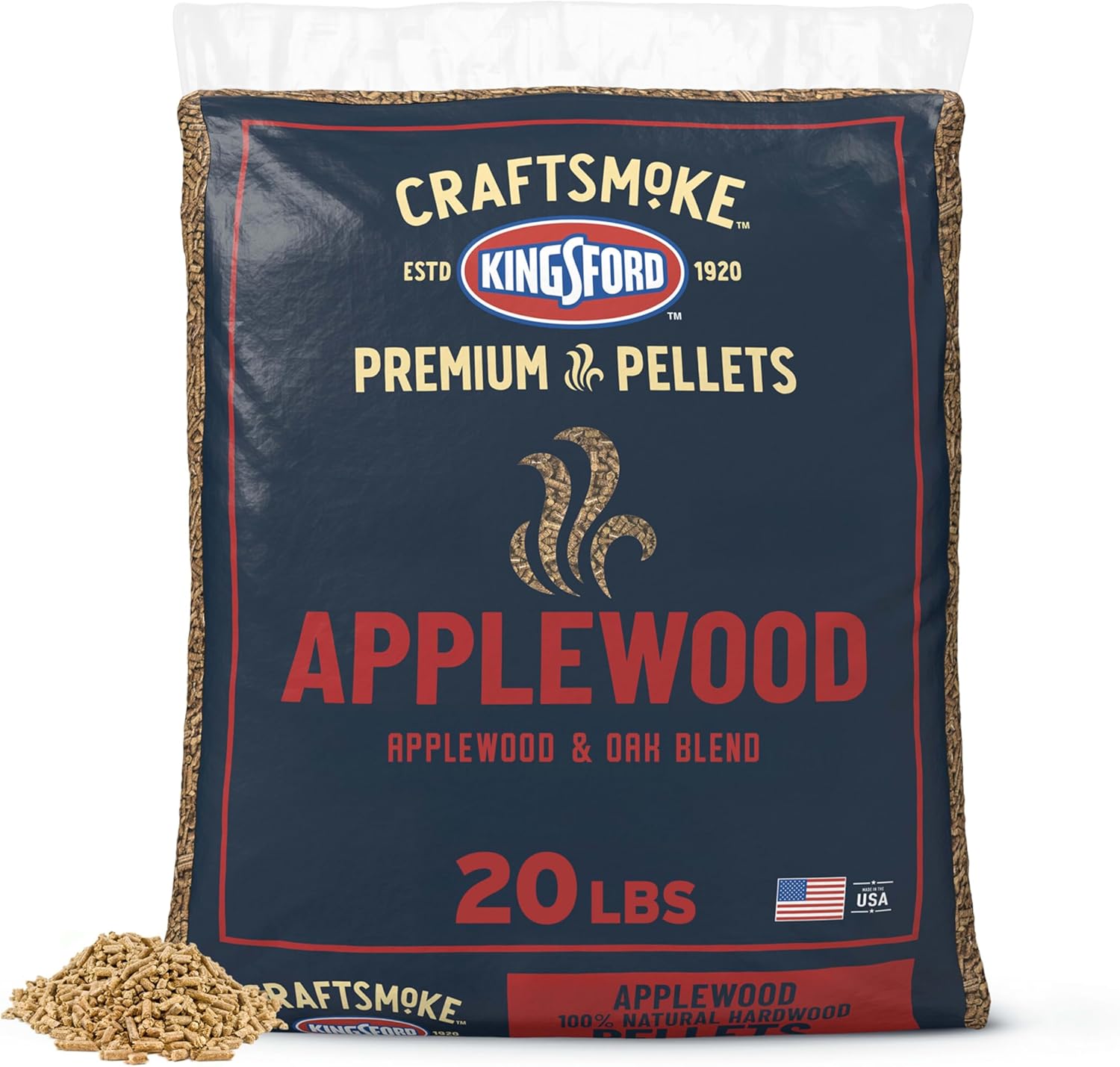
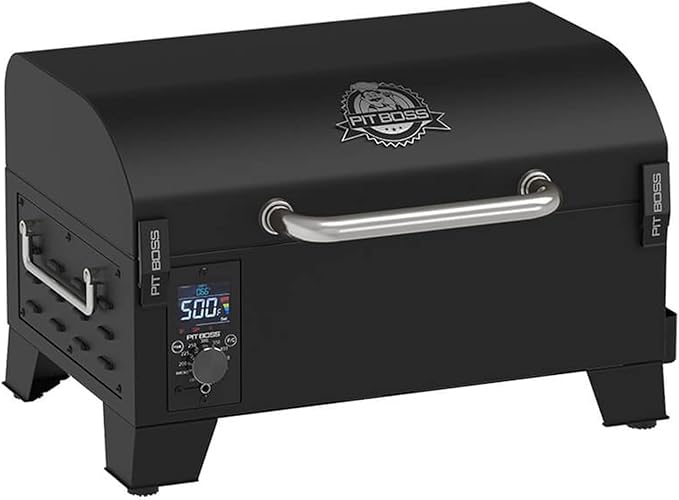
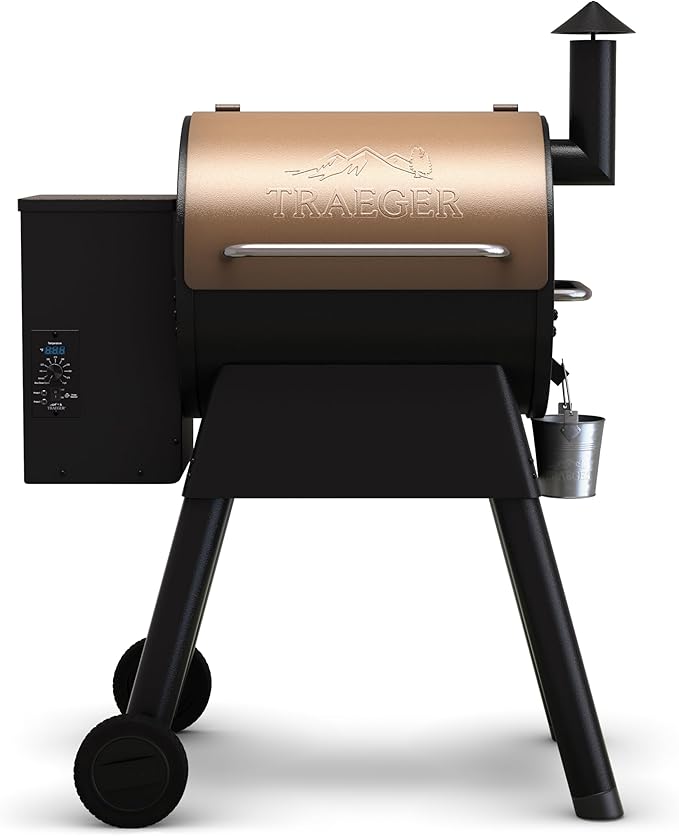
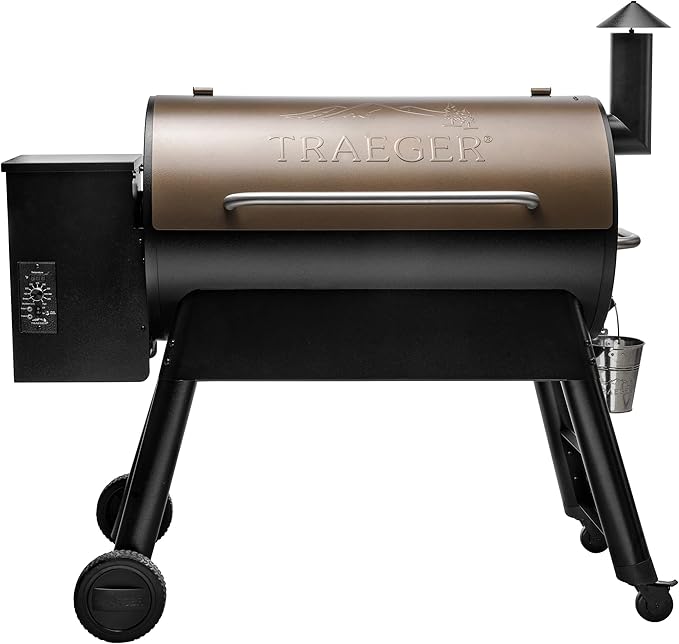
Burnt ends start as the point muscle of a packer brisket. After the brisket hits roughly 200°F internal, you separate the point, cube it into 1 to 1.25-inch chunks, toss it with rub and a touch of brown sugar, then pan it with butter and a thinned competition sauce. Back into the smoker it goes for another 60-90 minutes until each cube has the lacquered, candied edge judges look for. That second phase needs steady ambient heat around 250°F — exactly the sweet spot pellet rigs nail every time.
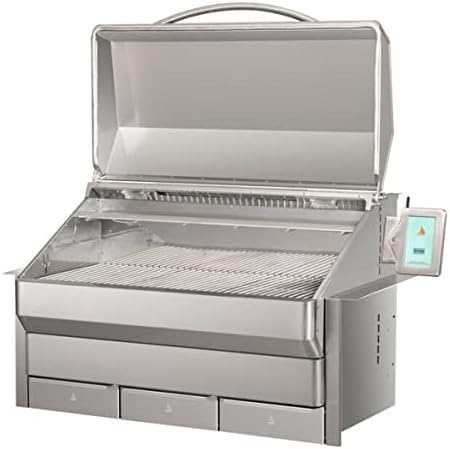
What to look for in a competition-ready pellet grill
- Cooking area: KCBS turn-ins for brisket are due Saturday at 1:30 p.m. You need room for two packers (insurance brisket is non-negotiable), plus a half hotel pan of cubes during phase two. Look for at least 570 sq in of primary grate space.
- Temperature range and recovery: 180°F super-smoke modes deposit color early; recovery after a lid open keeps your point from stalling twice.
- Pellet hopper capacity: A 15-18 lb hopper carries a brisket overnight without refills. Smaller table-top units force you to babysit.
- Build quality: Powder-coated steel that can survive trailer transport, rain, and a season of competition wear.
- Probe ports: Built-in meat probe inputs save you from threading aftermarket cables through the lid gasket.
Quick comparison: rookie-friendly competition smokers
| Model | Cook Area | Hopper | Best For Rookies Who… |
|---|---|---|---|
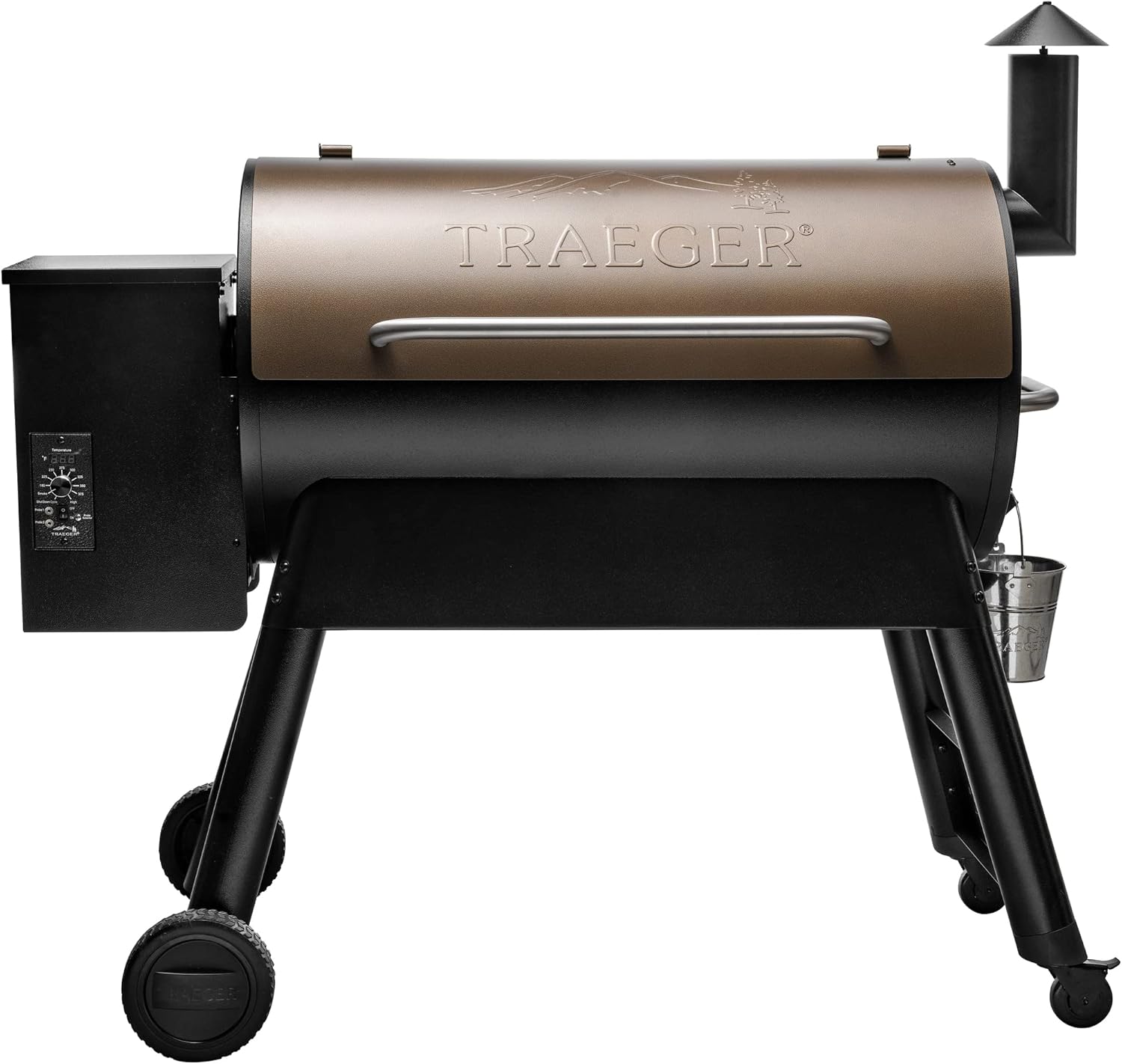
| Traeger Pro 34 | ~884 sq in | 18 lb | Want max real estate for two briskets + the burnt-end pan |
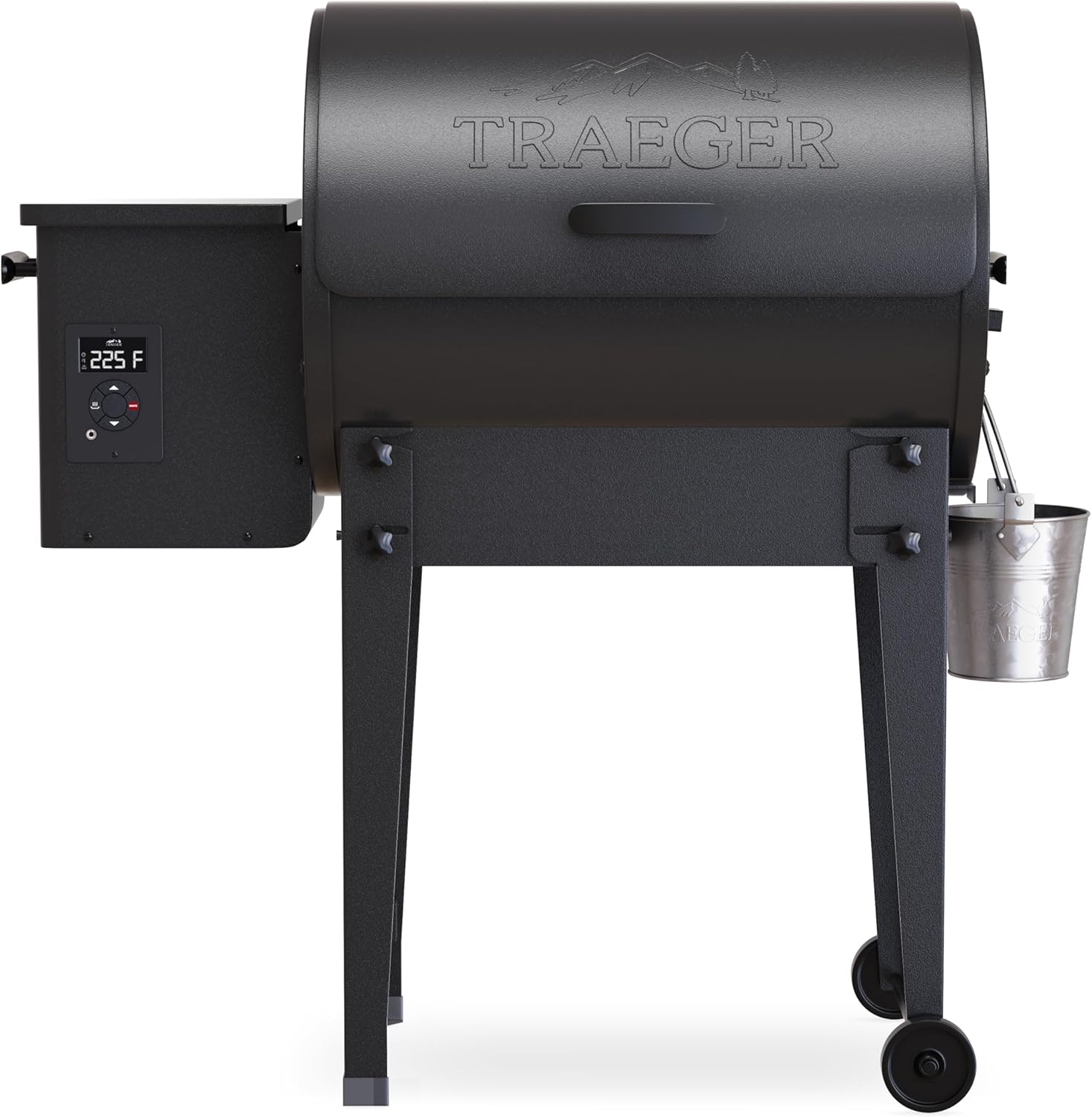
| Traeger Pro 22 | ~572 sq in | 18 lb | Cook a single packer and need a smaller trailer footprint |
| Pit Boss PB150PPG | 256 sq in | ~5 lb | Want a backup tabletop for sides or a side-by-side test rig |
| SmokinTex 1500-C | ~1,200 sq in | N/A (electric) | Need rock-steady temps for the phase-two braise |
| Amazon Basics Vertical Charcoal | ~388 sq in | N/A (charcoal) | Want a cheap second-pit for chicken thighs the same weekend |
Top picks for a competition BBQ rookie smoking burnt ends
1. Traeger Pro 34 — best overall for a first competition season
The Pro 34 is the rig I push every rookie toward. The 884 sq in chamber easily holds two 14-lb packers on the main grate plus a half-pan of cubed point on the upper rack during phase two. The digital pro controller stays within +/-15°F of setpoint, the 18-lb hopper gets you through a 14-hour overnight without a pellet refill, and the steel build survives rain, dew, and the back of an open trailer. For a first-year cook trying to learn burnt-end timing while also worrying about ribs, chicken, and brisket flat slices, having one pit that simply does what you tell it is invaluable. Check current pricing here: Traeger Pro 34 on Amazon.
2. Traeger Pro 22 — best compact option for solo cooks
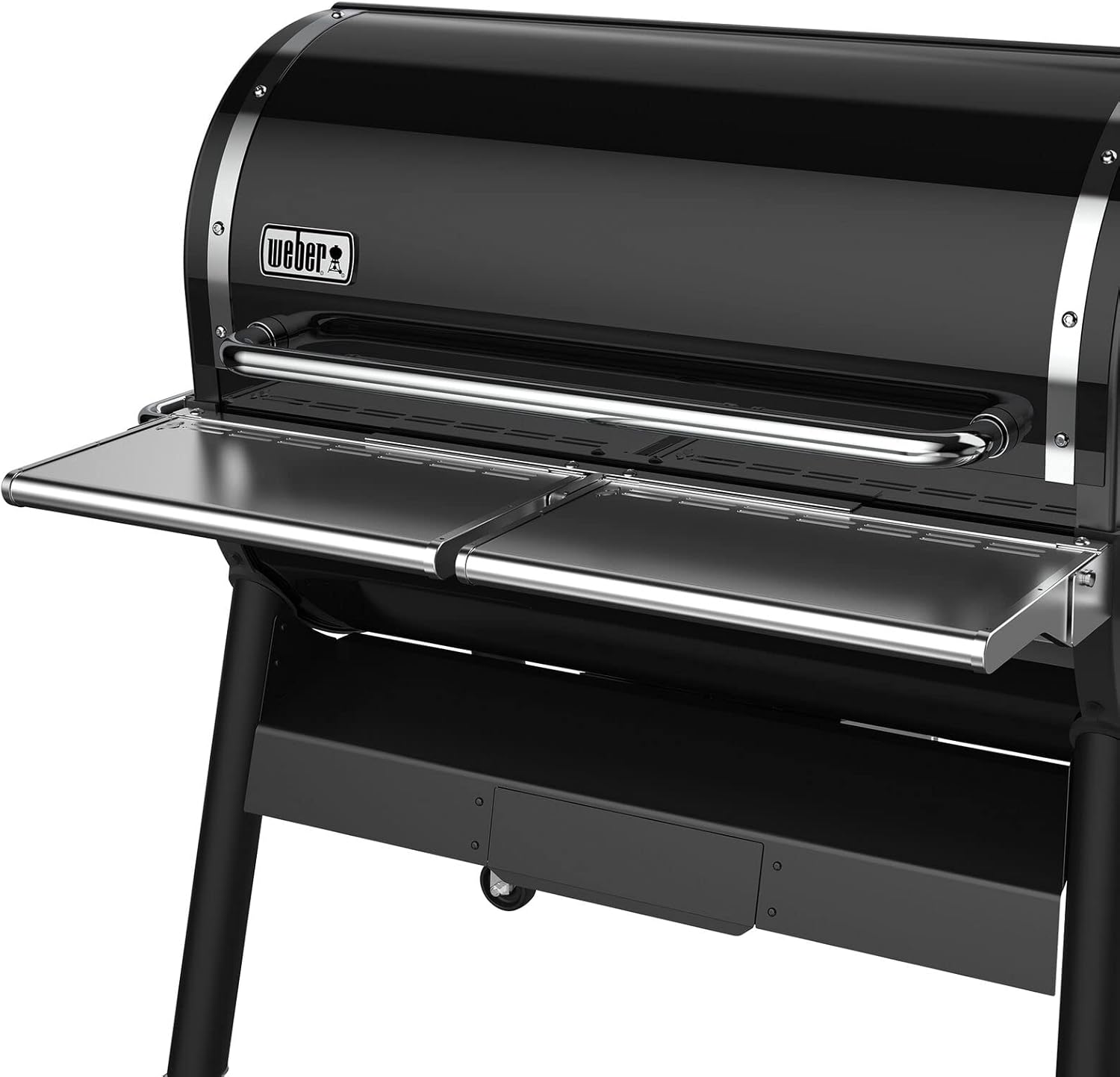
If you are cooking solo or your trailer is tight, the Pro 22 gives you the same controller and pellet system in a smaller 572 sq in body. You can fit one full packer brisket on the main grate, then move the point meat to the upper rack for the burnt-end braise while the flat rests in a cambro. The lighter weight (about 103 lbs) means one adult can load it onto a tailgate without wrenching a back. For a rookie who is unsure whether they will commit to a full season, the Pro 22 is a lower-stakes entry. Grab it here: Traeger Pro 22 on Amazon.
3. Pit Boss PB150PPG Tabletop — best for side dishes and backup duty
You will not cook your competition brisket on a 256 sq in tabletop — but the PB150PPG is the secret weapon for sides, sauce reduction, and a second-pellet flavor test. Run apple pellets in your main pit and hickory in the PB150 with a few cubes of point meat to see which judges prefer, all without sacrificing your main pit's flavor consistency. It also moonlights as a hot-holding cabinet during turn-in chaos. Tabletop convenience at a sub-$300 price makes this an easy add-on: Pit Boss PB150PPG on Amazon.
4. SmokinTex 1500-C — the phase-two braise specialist
Some experienced teams run a dedicated electric for the burnt-end braise because the rock-steady 250°F lets the cubes render fat without crusting too hard. The SmokinTex 1500-C is a commercial 80-lb capacity insulated electric that maintains setpoint to within a few degrees and uses real wood chunks for smoke. If you outgrow rookie status and want a backline that frees up your pellet rig for chicken and ribs on contest morning, this is the upgrade path. Pricier, but built like a vault: SmokinTex 1500-C on Amazon.
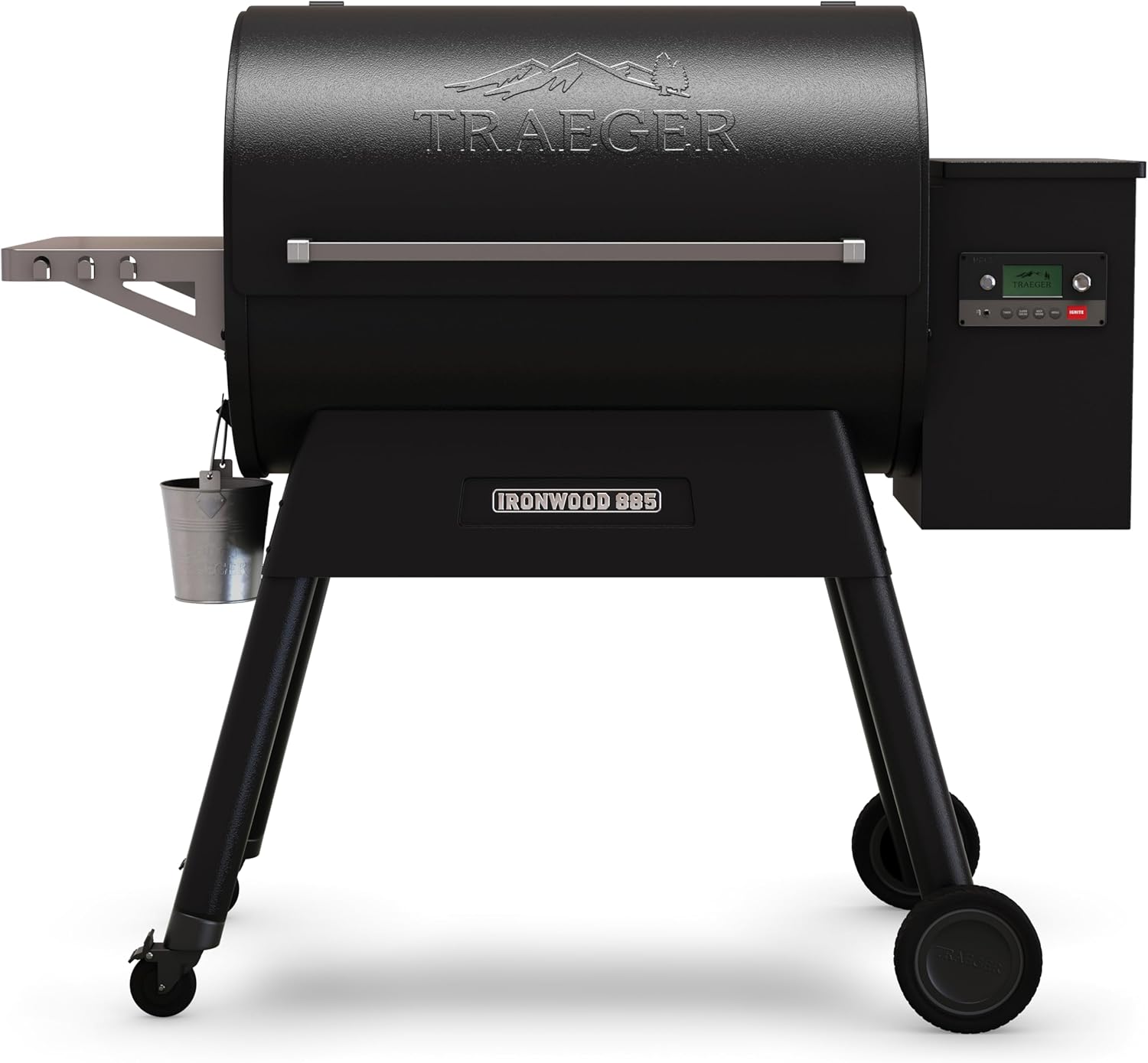
5. Amazon Basics 16-inch Vertical Charcoal Smoker — budget secondary pit
If you blew your budget on the Pro 34 and still need a secondary pit for chicken thighs or pork ribs, the Amazon Basics 16-inch vertical charcoal smoker is a $90 stopgap. It will not win you a brisket call, but it can free up your pellet grill to focus exclusively on the brisket and burnt-end pan during the critical overnight-to-turn-in window. Treat it as a disposable starter that you replace once you decide to commit to a real backup pit: Amazon Basics Vertical Charcoal Smoker on Amazon.
A rookie-proof timeline for competition burnt ends
Here is the schedule I give every first-year team for a Saturday 1:30 p.m. brisket turn-in (burnt ends are included in the brisket box but scored as part of that entry):
- Friday 6 p.m.: Trim two packers, separate visible fat seams but keep a 1/4" cap on the point. Apply binder and a layered SPG + competition rub.
- Friday 8 p.m.: Pellet grill set to 180°F super-smoke. Brisket on, fat-cap up, temperature probe in the flat.
- Saturday 1 a.m.: Bump to 225°F. Spritz with 50/50 apple juice and water every hour after the bark sets.
- Saturday 7 a.m.: Wrap in butcher paper at ~170°F internal. Bump pit to 250°F.
- Saturday 10 a.m.: Pull at 200-203°F probe-tender. Rest 30 minutes, then separate the point.
- Saturday 10:45 a.m.: Cube the point, toss with rub + brown sugar, pan with butter and thinned sauce, return to 250°F pit uncovered.
- Saturday 12:30 p.m.: Glaze with warm sauce, let tack up 10 minutes. Build the box: slices, then burnt ends in the back row.
For more rookie strategy reading, see our guides to choosing pellet brands for competition brisket and building a winning turn-in box.
Bark, color, and the pellet question
Pellet smokers historically lagged stickburners on bark depth because they produce cleaner combustion. Modern controllers with super-smoke or smoke-boost modes have closed most of that gap. For burnt ends specifically, a blend of cherry (for color) and hickory (for back-end depth) gives judges the mahogany hue they expect. Avoid heavy mesquite for a point cube — the small surface-area-to-mass ratio of a cube grabs smoke fast and can turn ashy. A 60/40 cherry-to-hickory blend during the initial smoke, then plain cherry during the braise phase, is a forgiving recipe for a rookie.
Frequently Asked Questions
Can a rookie really win burnt ends on a pellet grill at a KCBS contest?
Yes. Multiple top-10 brisket finishes every season come from pellet rigs — the equipment is no longer the limiter. What matters more is cube size consistency, sauce viscosity, and turn-in box build. The pellet grill simply removes fire management as a rookie failure point.
What temperature should I cook competition burnt ends at on a pellet grill?
Run 225°F for the brisket smoke through wrap, then bump to 250°F for the burnt-end braise phase. The slightly hotter braise renders the cube edges and tacks the glaze without drying the meat. Keep the pan uncovered so smoke continues to deposit color.
How big a pellet grill do I need to smoke two briskets for competition?
Plan on at least 570 sq in of primary grate space — one packer brisket eats roughly 250 sq in once it has rendered. The Traeger Pro 34's 884 sq in gives you both briskets plus a half-pan with room to spare, which is why it is the rookie favorite.
What pellets are best for competition burnt ends?
A 60/40 cherry-to-hickory blend hits the mahogany color judges expect without turning bitter. Avoid mesquite-heavy blends for cubed point — the high surface area absorbs smoke fast and can taste acrid. Buy 100% hardwood pellets from a known brand; filler oak pellets produce dull color.
Do I need a backup pit if I have a pellet grill?
For your rookie season, no. Cook brisket and burnt ends on the pellet rig, then stagger ribs and chicken so they fit the same chamber. After year one, most teams add a second pit so the brisket gets the whole pellet grill to itself overnight.
How early should I start the brisket for a Saturday 1:30 p.m. turn-in?
Plan 18 hours from pit-on to turn-in: roughly 14 hours of cook plus a 1.5-hour rest, 45 minutes for cubing and braising, and a 1.5-hour cushion for stalls. That means brisket on the pellet grill by 7:30 p.m. Friday. Rookies should add another hour of cushion — a too-early brisket can hold in a cambro for 4 hours; a late one cannot.
Is the Traeger Pro 22 enough for one brisket and burnt ends?
Yes, if you are willing to use the upper rack creatively. Put the brisket on the main grate, then during phase two place the half-pan of cubed point on the upper rack while the flat rests off-pit. The 572 sq in primary area is tight but workable for a solo cook with one packer.
Bottom line
For a competition BBQ rookie chasing that first burnt-ends call, the best pellet grill for burnt ends competition rookie use is the Traeger Pro 34 — it gives you the room, the steady temps, and the hopper capacity to run a full overnight without a babysit, then handles the phase-two braise on the same pit. Pair it with a quality cherry-hickory pellet blend, follow the timeline above, and your first season turn-ins will look like a third-year team's. For deeper reading, browse our pellet vs. offset comparison for competition use.
Key Takeaways
- Choosing the right best pellet grill for burnt ends competition rookie means matching capacity and output ports to your actual devices
- Always check actual watt-hours (Wh), not just watts — runtime depends on Wh, not peak output
- Also covers: pellet smoker for first bbq competition
- Also covers: beginner competition pellet grill
- Also covers: best smoker for burnt ends contest
- Compare price-per-Wh across models to find the best value for your budget